Dinner night · Yemen
Weeknight Chicken Mandi
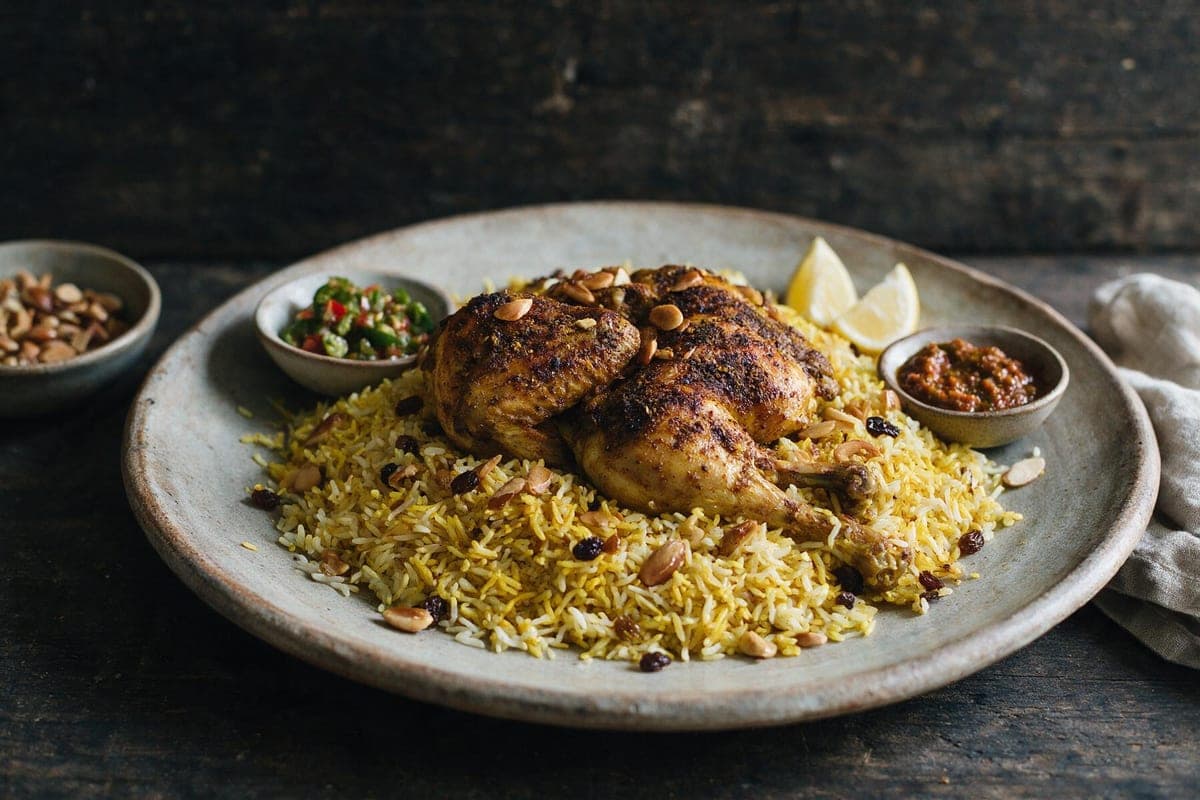
Yemen's celebration rice, adapted for an oven: hawaij-rubbed chicken roasted over turmeric basmati that cooks in the drippings, with a green chile salsa on the side.

- Prep
- 20 min
- Cook
- 55 min
- Total
- 75 min
- Serves
- 2 adults + 1 child, with rice left over
- Budget
- $15–$23
Mandi is the great rice dish of Yemen: meat slow-cooked over a pit of coals until it is tender and faintly smoky, set on a mound of long-grain rice that has cooked in the dripping fat and spiced stock beneath it. The spice blend is hawaij, a Yemeni mix of cumin, black pepper, turmeric, coriander and cardamom; the color is a sunny yellow. This weeknight version roasts chicken thighs over basmati in a Dutch oven so the drippings season the rice, then adds smoke with a traditional restaurant trick: a piece of glowing charcoal in a cup of oil inside the covered pot for five minutes. It is served with sahawiq, a bright green chile-and-tomato salsa.
Why it's on our list
Yemen has one of the oldest and most distinctive food cultures on the Arabian Peninsula, and mandi is the dish Yemeni restaurants from Dearborn to Dubai are built around. I want to learn hawaij, a spice blend I can keep in a jar for weeks, and the drippings-into-rice method that makes a one-pot dinner taste like a feast. The real dish takes a pit and most of a day; this version is honest about being an oven adaptation, and it comes together in 75 minutes with 20 of them hands-on. The chicken and rice are gently spiced, not hot, so my son's plate is the same as ours; the sahawiq stays in its own bowl for the adults.
Field notes · Origin & culture
Mandi is strongly associated with Yemen, and most accounts place its origins in the Hadhramaut region of the south and east, from which Hadhrami traders and migrants carried it to the Gulf states, East Africa and Southeast Asia; it is now standard on restaurant menus in Saudi Arabia and the Emirates. The name is usually traced to the Arabic root for "dew," a reference to the moist, tender meat. Traditionally lamb, goat or chicken is seasoned and hung inside a pit oven above a pot of rice, the opening is sealed, and the meat cooks for hours in the trapped heat and smoke. In Yemen mandi is eaten from a large shared platter, often at weddings and Friday lunch, with salad, tomato sauce and sahawiq. Home ovens have produced many adaptations like this one.
Noteworthy ingredients
- Hawaij: The Yemeni spice blend. Mix it yourself: 1 tablespoon ground cumin, 1 tablespoon black pepper, 1 1/2 teaspoons turmeric, 1 teaspoon ground coriander, 1 teaspoon ground cardamom. Middle Eastern groceries and online spice shops sell it ready-made.
- Basmati rice: Rinse it several times and soak it 20 minutes so it cooks evenly under the chicken.
- Bone-in, skin-on chicken thighs and legs: The fat renders into the rice. A whole chicken cut into quarters is traditional and works with 15 extra minutes.
- Charcoal for smoke (optional): One natural lump, lit on a gas burner with tongs until glowing, dropped into a small heatproof cup of oil set on the rice, covered 5 minutes. If that sounds like too much, add 1/2 teaspoon smoked paprika to the hawaij and skip it.
- Green chiles and tomatoes for sahawiq: Jalapeños or serranos blended with tomato, garlic, cilantro and lemon. It is the heat in the meal and it lives in its own bowl.
Prep — 20 min
- Mix the hawaij. Rub the chicken all over and under the skin with 2 tablespoons of it, 1 1/2 teaspoons salt and 1 tablespoon oil. Heat the oven to 400°F.
- Rinse the rice until the water runs nearly clear and soak it 20 minutes. Slice the onions thin. Smash 2 garlic cloves.
- Sahawiq: blend 1 tomato, the chiles (seeded for less heat), 2 garlic cloves, a handful of cilantro, the juice of half a lemon and a pinch of salt into a coarse salsa. Chill.
- Dice the cucumber and 2 tomatoes for a salad; dress with lemon, salt and cilantro just before serving.
Cook — 55 min
- Heat 2 tablespoons oil in a Dutch oven over medium heat. Cook the onions with a pinch of salt 8 minutes until soft and golden. Add the smashed garlic, the remaining hawaij, and the whole cardamom, cloves and bay if using; stir 30 seconds.
- Drain the rice and stir it into the onions for a minute so every grain is coated yellow. Add the stock and 1 teaspoon salt and bring to a boil. Scatter in the raisins if using.
- Set a wire rack or an upturned steamer basket on the rice and lay the chicken on it skin-side up, or simply nestle the chicken skin-side up on top of the rice. Cover and bake 25 minutes.
- Uncover and bake 20–25 minutes more until the skin is deep golden and the thickest piece reads 165°F; the rice should have absorbed its liquid. If the skin is pale, broil 2–3 minutes.
- For the smoke: move the chicken to a plate, set a ramekin or folded foil cup on the rice, pour in 2 tablespoons oil, and with tongs drop in the charcoal you lit over a gas burner. It will smoke at once; cover tightly, wait 5 minutes, then remove the cup carefully. Skip this if it is not for you.
- Fluff the rice, remove the whole spices, and toast the almonds in the butter for garnish if using.
Serving
Mound the rice on a large platter, set the chicken on top, scatter the almonds and raisins, and bring it to the table with the salad, sahawiq and lemon wedges so people spoon on their own heat; eating from a shared platter is the Yemeni way, though plates are fine. My son's plate is rice and chicken as is. Leftovers keep three days and reheat well covered with a splash of water; the rice is excellent the next day with a fried egg.